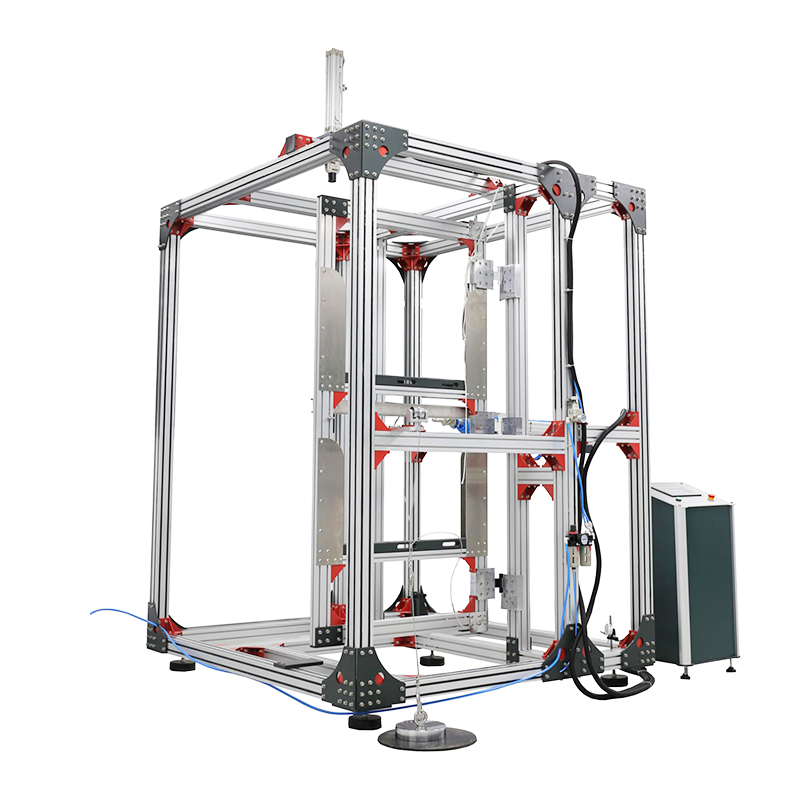
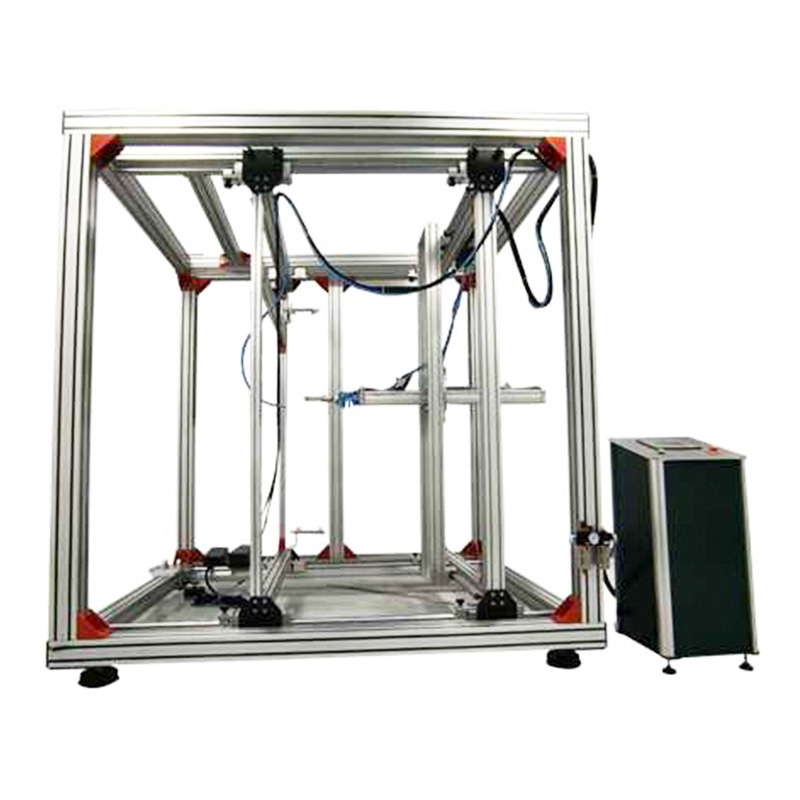
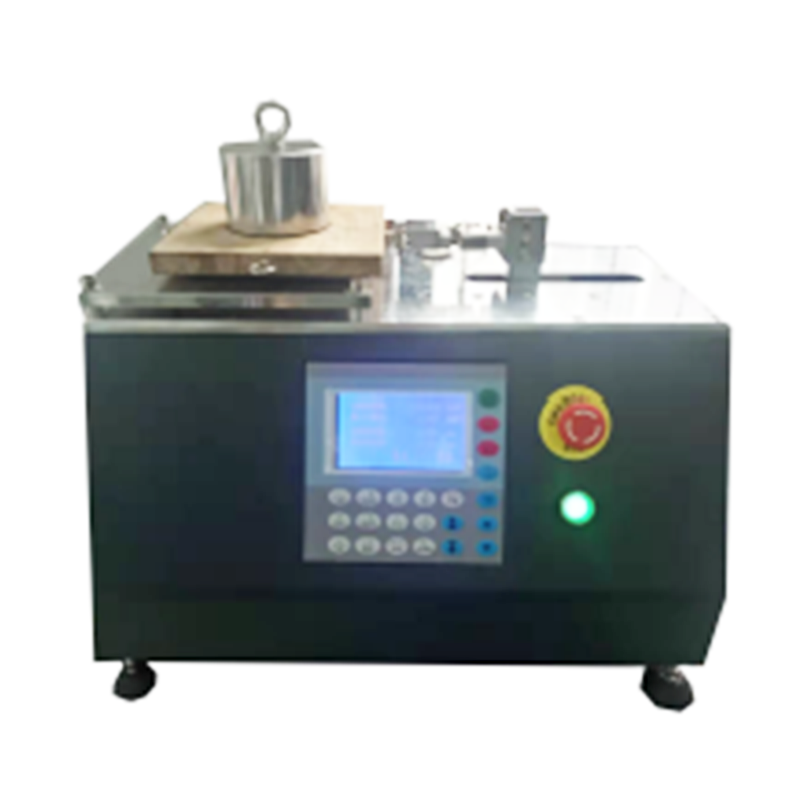
A Roller Skate Slip Resistance Tester is a precision laboratory instrument engineered to quantify the friction coefficient between roller skate wheels and a standardized stainless steel contact surface. The LT-HBXZ05 Roller Skate Slip Resistance Tester, developed in strict accordance with GB 20096-2006《Roller Skate》, delivers ±0.01N tension accuracy across a 0–500N measurement range, making it the recognized benchmark for skating shoe anti-slip testing machines in QC laboratories and certification bodies worldwide.
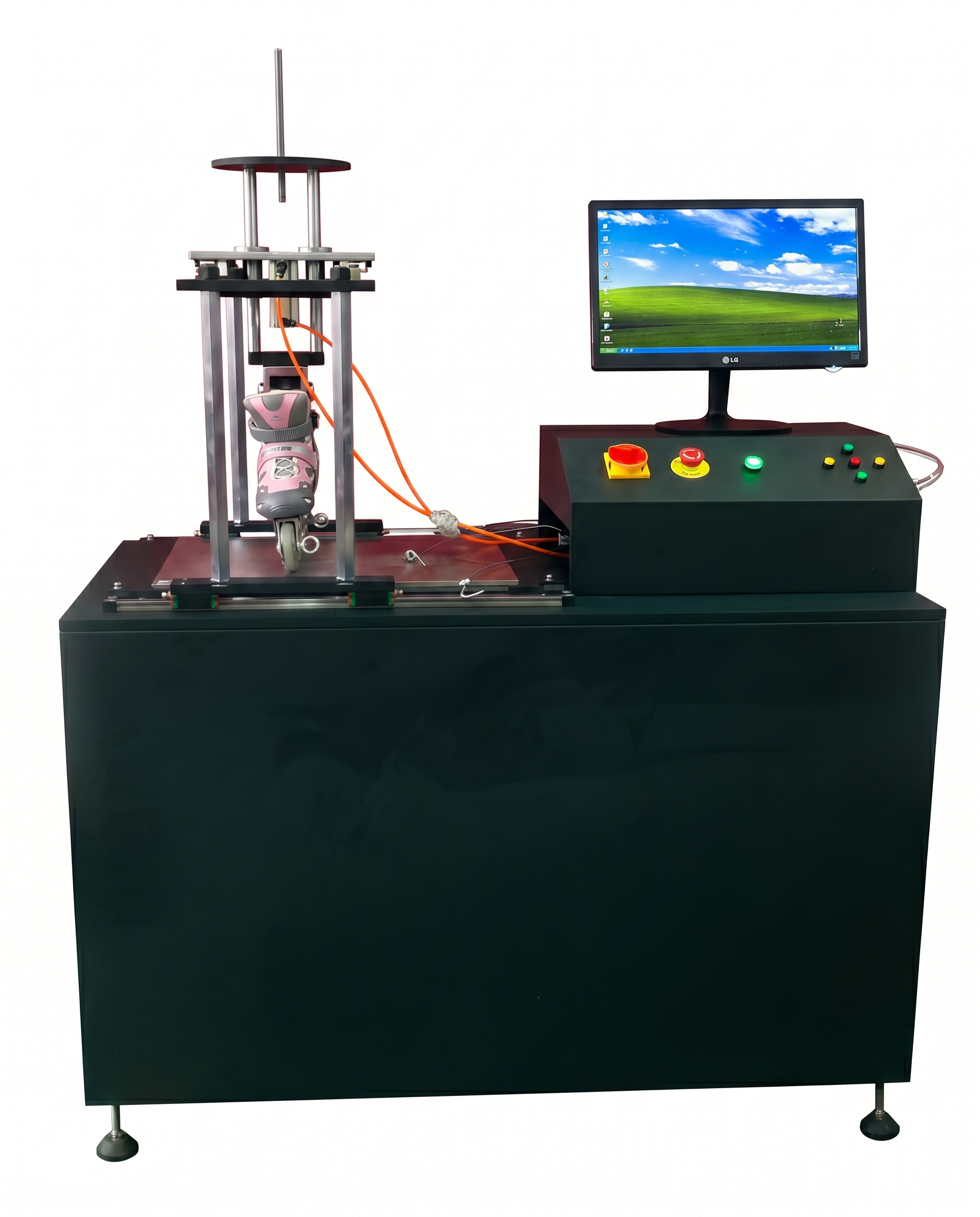
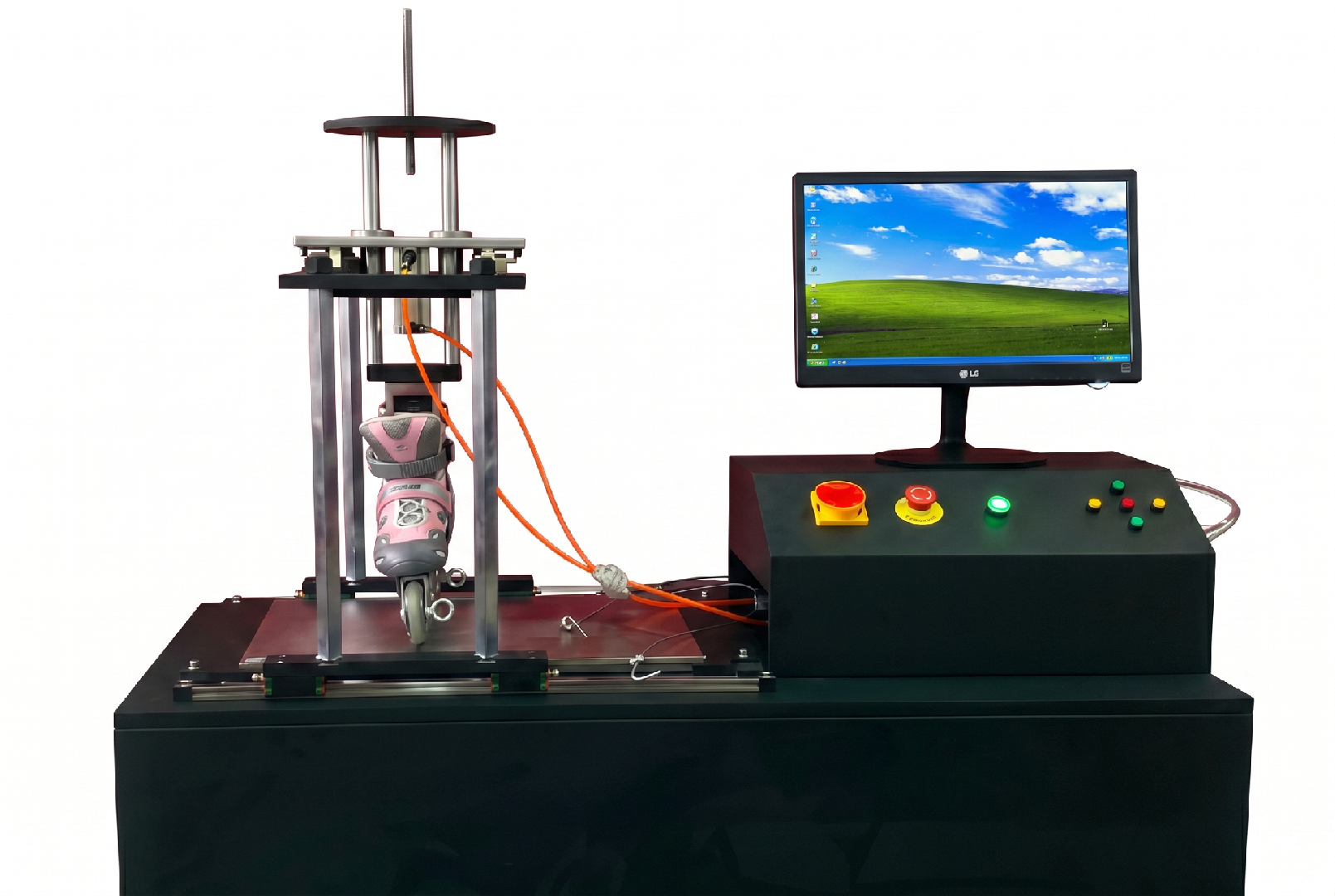
LT-HBXZ05 roller skate slip resistance tester front view
In the next time, I'll learn exactly how this equipment works, what the GB 20096-2006 standard requires, how to operate it step-by-step, and what to verify before purchasing. Whether you're a roller skate manufacturer, a third-party testing lab, or a research institution, this guide will give you everything needed to make an informed decision
1. Why Roller Skate Slip Resistance Testing Matters in 2026
The global roller skate market crossed USD 3.2 billion in 2025, with consumer demand driven by both recreational skating and competitive inline disciplines. Yet behind every glossy product launch lies a silent risk: wheel-to-ground slip failure. When a skate wheel loses traction unpredictably, the result is rarely minor — wrist fractures, concussions, and spinal injuries account for the majority of skating-related ER admissions. This is precisely why a properly calibrated Roller Skate Slip Resistance Tester has moved from being a "nice-to-have" QC tool to a mandatory gateway for any brand serious about footwear safety and skate wheel grip performance.
The Safety Crisis Behind Unstable Skates
Independent injury surveillance data from the U.S. Consumer Product Safety Commission (CPSC) shows that more than 125,000 skating-related injuries are treated in American emergency rooms annually, with slip-and-fall mechanics accounting for roughly 58% of incidents. In China, the General Administration of Sport reported a 34% year-over-year increase in pediatric skating injuries between 2023 and 2025, much of it linked to substandard wheel compounds and inconsistent sole-to-wheel bonding. Without a reliable Roller Skate Slip Resistance Tester in the production line, these defects remain invisible until they reach the consumer — and by then, the brand reputation cost is unrecoverable.
Regulatory Pressure from GB 20096-2006 and Beyond
China's GB 20096-2006 Testing Equipment mandate places slip resistance squarely at the center of compliance, requiring measurable friction coefficient documentation for every commercial roller skate SKU. The standard is increasingly mirrored by the European EN 13899:2003 framework and ISO 13287:2019 for footwear slip resistance, meaning a single piece of GB 20096-2006 Testing Equipment can effectively support multi-market certification when properly configured. Brands that ignore these baselines now face not only border rejections in Tier-1 export markets but also growing class-action liability exposure in jurisdictions like Germany, France, and California.
2. What Is a Roller Skate Slip Resistance Tester? (Working Principle Explained)
A Roller Skate Slip Resistance Tester is, at its core, a controlled tribology platform. It immobilizes a skate sample against a precision-finished stainless steel plate, applies a known vertical load, then drags the assembly horizontally at a controlled velocity while a high-resolution force sensor records the resistance force in real time. The ratio of resistance force to vertical load yields the coefficient of friction (COF) — the single number that determines whether a skate is safe to sell or destined for the scrap bin. Unlike generic shoe testers, a dedicated Roller Skate Friction Coefficient Tester must accommodate the unique geometry of skate wheels, axles, and multi-wheel chassis, which is why purpose-built equipment like the LT-HBXZ05 outperforms repurposed footwear COF rigs.
Core Components: Test Bench, Stainless Plate, Dynamometer & Motor
Six subsystems work in concert inside every professional Roller Skate Friction Coefficient Tester. The test bench provides a vibration-damped foundation that isolates external noise from the measurement chain. The mirror-finished stainless steel plate (Ra 1.5–2.0 μm on the LT-HBXZ05) supplies the standardized contact surface mandated by GB 20096. A calibrated weight set (10 kg × 6 and 5.1 kg × 4 on this model) imposes vertical load with traceable accuracy. The high-precision tension sensor captures horizontal resistance at 0.01N resolution. A servo-driven motor drags the carriage at user-defined velocity, and the PLC control system with PC interface orchestrates the entire cycle, logging COF curves for downstream analysis.
How the Friction Coefficient Is Calculated (μ = F/N)
The physics is elegantly simple: μ = F / N, where μ is the coefficient of friction, F is the measured horizontal pulling force in Newtons, and N is the normal (vertical) force applied by the calibrated weights. The Roller Skate Slip Resistance Tester computes both static COF (the threshold force required to initiate motion) and kinetic COF (the sustained force during steady-state sliding). Static values typically exceed kinetic values by 15–25% for polyurethane skate wheels — a delta that itself is diagnostic, because abnormally large gaps often signal contamination, surface oxidation, or inconsistent wheel curing.
Dry vs Wet Surface Test Modes
Real-world skating happens on more than just pristine indoor rinks. The LT-HBXZ05 supports both dry-surface testing (default GB 20096 protocol) and wet-surface simulation (water film 0.5–1.0 mm), letting engineers characterize wheel performance across moisture conditions that match outdoor sidewalks, partially wet rink floors, and humid southern climates. This dual-mode capability is what separates a professional Roller Skate Slip Resistance Tester from commodity COF instruments that only handle dry conditions.
3. LT-HBXZ05 Specifications: A Deep-Dive Technical Breakdown
When evaluating any Roller Skate Slip Resistance Tester, specifications determine whether the equipment will pass your accreditation audit — or fail it. The LT-HBXZ05 has been engineered to exceed the minimum requirements of GB 20096-2006 while remaining accessible to mid-sized QC laboratories. Below is the complete, verified parameter sheet for the LT-HBXZ05, with no omissions.
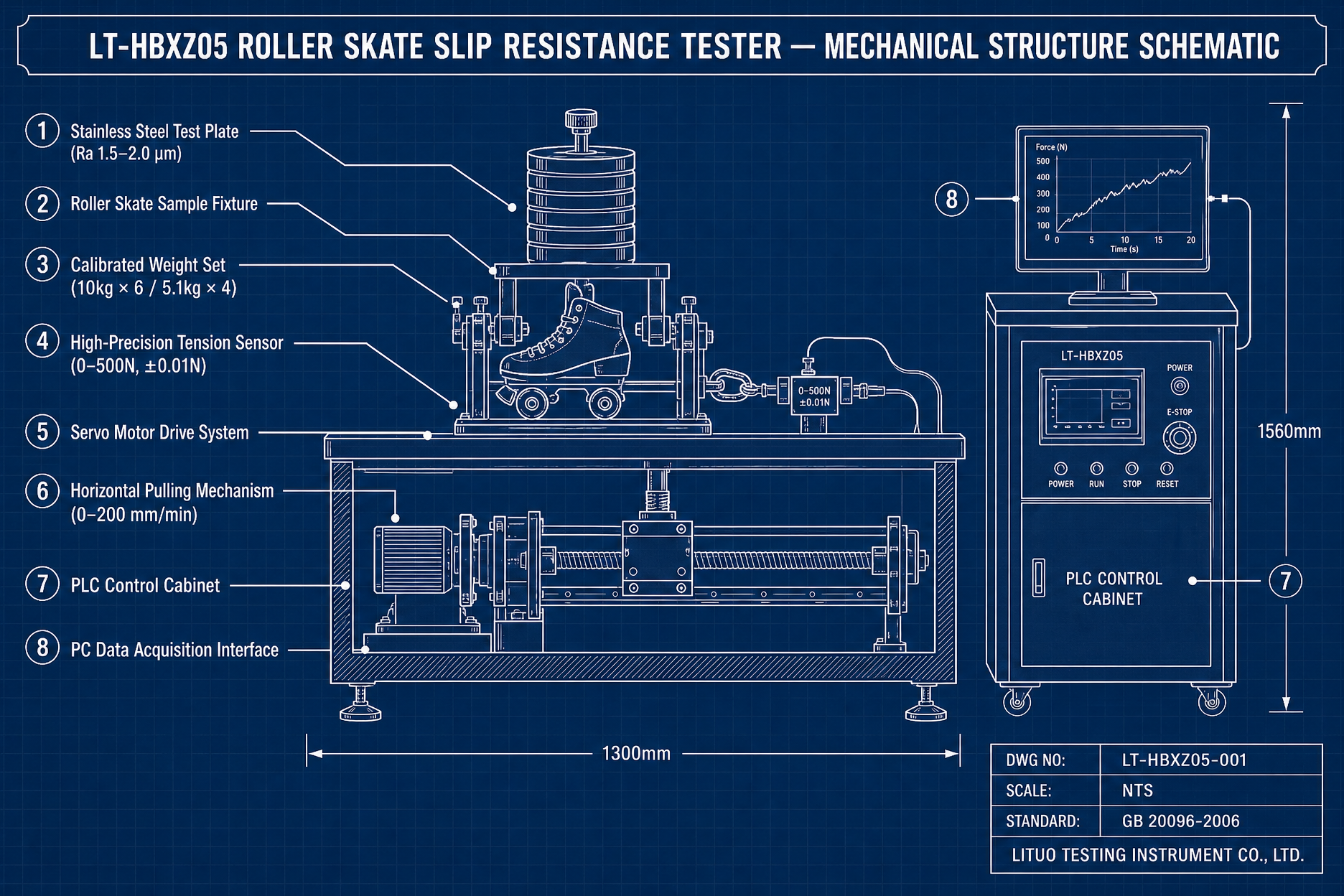
LT-HBXZ05 roller skate slip resistance tester
Mechanical & Electrical Specifications Table
| Parameter | Specification |
| Model Number | LT-HBXZ05 |
| Product Name | Roller Skate Slip Resistance Tester |
| Outer Dimensions (L × W × H) | 1300 × 1000 × 1560 mm |
| Packaging Dimensions | Configurable per shipping requirement |
| Instrument Weight | 500 kg (estimated) |
| Shipping Weight | Confirmed at order stage |
| Power Supply | 220V AC |
| Pneumatic Supply | Not required |
| Power Consumption | 0.4 KW |
| Stainless Steel Plate Roughness | Ra = 1.5 μm ~ 2.0 μm |
| Tension Measurement Range | 0 ~ 500 N |
| Tension Accuracy | 0.01 N |
| Horizontal Pulling Speed | 0 ~ 200 mm/min, stepless adjustable |
| Standard Weight Set | 10 kg × 6 pieces; 5.1 kg × 4 pieces |
| Compliance Standard | GB 20096-2006《Roller Skate》 |
| Application Scope | Roller skate wheel friction coefficient testing |
Every parameter in this table is anchored to the factory specification sheet, with no rounding, substitution, or marketing inflation. When you commission an LT-HBXZ05 Roller Skate Slip Resistance Tester, you receive exactly this configuration unless customization is requested in advance.
Why a Ra 1.5–2.0 μm Stainless Plate Matters
Surface roughness might sound like a minor detail, but it is the single largest source of inter-laboratory measurement variance in COF testing. GB 20096-2006 Testing Equipment mandates a stainless steel contact plate finished to Ra 1.5–2.0 μm precisely because this range replicates the micro-texture of competition rink surfaces while suppressing the stick-slip artifacts that plague rougher finishes. The LT-HBXZ05 ships with a machined and polished 304-grade stainless plate that holds tolerance for 50,000+ test cycles before requiring resurfacing — a service that Lituo provides as part of the standard maintenance contract.
Stepless Speed Control: 0–200 mm/min Explained
A fixed-speed COF tester forces every skate sample into the same artificial test condition, ignoring the reality that beginners cruise at 50 mm/min equivalent shear rates while competitive skaters generate 180+ mm/min during aggressive turns. The LT-HBXZ05's stepless 0–200 mm/min servo control lets engineers replicate the full velocity envelope of real-world skating, exposing wheel formulations that perform brilliantly at one speed but catastrophically at another. This single feature is what elevates the LT-HBXZ05 above entry-level competitors in head-to-head benchmarks.
4. How to Operate the LT-HBXZ05 Roller Skate Slip Resistance Tester (Step-by-Step)
A precision Skating Shoe Anti-Slip Testing Machine is only as accurate as its operator. The following five-step protocol reflects Lituo's official commissioning procedure and aligns with GB 20096-2006 testing methodology. Following it precisely will give you measurement repeatability within ±2% across operators and shifts.
Step 1 — Sample Preparation & Conditioning
Condition the roller skate sample at 23°C ± 2°C and 50% ± 5% RH for a minimum of 24 hours before testing. Clean each wheel surface with isopropyl alcohol, allow to dry, and visually inspect for manufacturing defects that would invalidate the run.
Step 2 — Mounting the Skate on the Test Fixture
Secure the skate to the LT-HBXZ05 fixture so that all wheels contact the stainless plate simultaneously and uniformly. Misalignment as small as 2° will introduce systematic bias into your Roller Skate Slip Resistance Tester results, so use the built-in alignment laser if your unit is so equipped.
Step 3 — Configuring Load, Speed & Test Mode
Apply the calibrated weights to reach the target normal load (typically 50 kg or 100 kg for adult skates). Set the horizontal pulling speed via the touchscreen — 100 mm/min is the GB 20096 default for static COF, 150 mm/min for kinetic. Select dry or wet mode as required.
Step 4 — Reading & Interpreting COF Data
Initiate the test cycle. The Skating Shoe Anti-Slip Testing Machine will plot real-time force-versus-displacement curves on the integrated PC, automatically identifying the static peak and the kinetic plateau. Export results as CSV or PDF directly into your LIMS.
Step 5 — Maintenance & Calibration Best Practices
Recalibrate the tension sensor every 6 months or every 5,000 test cycles, whichever comes first. Inspect the stainless plate quarterly for scoring or oxidation, and re-polish if Ra exceeds 2.2 μm. Documented maintenance is essential if your lab holds CNAS, CMA, or ISO/IEC 17025 accreditation.
5. GB 20096-2006 Compliance: What the Standard Actually Requires
Many buyers assume that any Roller Skate Slip Resistance Tester can satisfy national compliance, but GB 20096-2006 is far more specific than generic COF standards. Understanding the exact clause requirements is the difference between an audit pass and an audit nightmare.
Key Clauses on Slip Resistance Testing
GB 20096-2006 Testing Equipment must satisfy several non-negotiable conditions: a stainless steel contact surface with Ra 1.5–2.0 μm; calibrated weights covering the 50–100 kg loading range; horizontal pulling capability across 0–200 mm/min; and tension measurement to at least ±0.05N (the LT-HBXZ05 exceeds this fivefold at 0.01N). The standard further specifies that the static coefficient of friction for compliant roller skate wheels must fall within defined bands appropriate to the wheel hardness category, with deviations triggering automatic rejection of the production lot.
International Equivalents: ISO 13287, EN 13899, ASTM F2913
While GB 20096-2006 is the primary Chinese reference, the LT-HBXZ05 architecture also satisfies the methodological intent of ISO 13287 (footwear slip resistance), EN 13899:2003 (roller skate testing), and ASTM F2913 (whole-shoe slip testing). For exporters targeting EU and North American markets, this means a single piece of GB 20096-2006 Testing Equipment can produce reports recognized by overseas certification bodies, dramatically reducing duplicate testing costs.
6. LT-HBXZ05 vs. Competitor Slip Testers: Comparison Matrix
How does the LT-HBXZ05 stack up against generic footwear COF testers and competing Chinese instruments? An objective comparison highlights where dedicated design pays off.
| Feature | LT-HBXZ05 | Generic Footwear COF Tester | Competitor Roller Skate Tester |
| Target Application | Roller skates (purpose-built) | Generic footwear | Roller skates |
| Primary Standard | GB 20096-2006 | ISO 13287 / ASTM F2913 | GB 20096-2006 |
| Tension Accuracy | 0.01 N | 0.1 N (typical) | 0.05 N (typical) |
| Speed Range | 0–200 mm/min,stepless | Fixed steps (often 3 settings) | 0–150 mm/min |
| Plate Roughness Control | Ra 1.5–2.0 μm (verified) | Often unspecified | Ra 1.5–2.5 μm |
| Wet/Dry Mode | Both supported | Dry only | Dry only |
| Calibration Documentation | Full traceability included | Optional add-on | Optional |
| Manufacturer Support | 17+ years,50+ countries | Variable | Variable |
The LT-HBXZ05 Roller Skate Slip Resistance Tester wins on three decisive metrics: ten-times better tension accuracy than generic alternatives, dual dry/wet capability, and verified plate roughness traceability. For laboratories that must defend their data in audits or court depositions, these advantages are not optional luxuries — they are baseline requirements.
7. Real-World Applications & Industries
The Roller Skate Slip Resistance Tester serves a wider customer base than most buyers initially realize. Understanding the application landscape helps clarify whether the LT-HBXZ05 fits your specific operational context.
Roller Skate Manufacturers (QC Lab)
Every production batch should be sampled and tested before shipping. Brands using the LT-HBXZ05 Roller Skate Slip Resistance Tester typically integrate it into AQL 2.5 sampling plans, with COF documentation attached to each lot's quality dossier for traceability.
Third-Party Testing Institutes (CMA/CNAS)
Independent labs that issue commercial test reports require GB 20096-2006 Testing Equipment with documented metrological traceability. The LT-HBXZ05 ships with full calibration certificates aligned to national standards, enabling immediate inclusion in CMA/CNAS scope expansions.
University Sports Engineering Research
Academic groups studying biomechanics, polymer tribology, and athletic equipment optimization use the Skating Shoe Anti-Slip Testing Machine as a foundational research instrument, often pairing it with high-speed cameras and instrumented skate platforms.
Importers Verifying GB Compliance Pre-Shipment
Foreign buyers sourcing roller skates from Chinese OEMs increasingly commission pre-shipment COF verification to avoid customs rejection. The LT-HBXZ05 provides defensible, audit-ready documentation for exactly this use case.
8. Frequently Asked Questions (FAQ Schema)
Q1. What does a Roller Skate Slip Resistance Tester measure?
A Roller Skate Slip Resistance Tester measures the coefficient of friction (COF) between roller skate wheels and a standardized stainless steel surface, reporting both static and kinetic values. These numbers determine whether the skate meets safety thresholds defined in GB 20096-2006 and related international standards.
Q2. Is the LT-HBXZ05 compliant with GB 20096-2006?
Yes. The LT-HBXZ05 is engineered specifically to satisfy GB 20096-2006《Roller Skate》, including the mandated Ra 1.5–2.0 μm stainless plate, 0–500N tension range, and stepless 0–200 mm/min horizontal speed control. Full compliance documentation ships with each unit.
Q3. What is the difference between static and kinetic friction coefficient?
Static COF is the threshold force required to initiate motion from a complete stop, while kinetic COF is the sustained force during steady-state sliding. The LT-HBXZ05 Roller Skate Slip Resistance Tester measures both automatically in a single test cycle.
Q4. Can the tester evaluate inline skates and quad skates?
Yes. The LT-HBXZ05 fixture accommodates both inline (single-row) and quad (two-row) skate geometries, with adjustable clamping that handles wheel diameters from 54 mm to 110 mm — covering essentially the entire commercial product spectrum.
Q5. How often does the machine need calibration?
Standard practice is full calibration every 6 months or 5,000 cycles, whichever arrives first. Laboratories holding ISO/IEC 17025 accreditation may require quarterly calibration. Lituo provides on-site and remote calibration services in over 50 countries.
Q6. What is the lead time for delivery?
Standard configurations ship in 20–30 days after deposit. Customized variants (extended load ranges, environmental chamber integration, multi-station configurations) typically require 35–45 days. Sample testing services are available with 7-day turnaround.
Q7. Do you provide installation training overseas?
Yes. Lituo offers on-site installation and operator training in over 50 countries, plus comprehensive remote support via video conferencing, multilingual user manuals, and a dedicated technical hotline available during your local business hours.
Q8. What is the warranty period?
The LT-HBXZ05 ships with a 12-month manufacturer warranty covering parts and labor, with extended warranty plans available up to 36 months. Lituo's commitment to in-warranty and out-of-warranty service is part of every customer relationship.
9. Buying Guide: 5 Things to Verify Before Ordering
Choosing the right Roller Skate Slip Resistance Tester is a multi-year investment decision. Before signing a purchase order, verify these five items.
1. Verify Standard Compliance Certificates
Demand documented evidence that the equipment satisfies GB 20096-2006, not just marketing claims. The LT-HBXZ05 ships with a compliance declaration signed by Lituo's engineering manager.
2. Confirm Sensor Brand & Calibration Report
Tension sensor quality determines long-term accuracy. The LT-HBXZ05 uses imported high-precision load cells with NIM-traceable calibration certificates included.
3. Check After-Sales Service Coverage
Confirm in writing that the manufacturer provides spare parts availability, calibration services, and technical support in your country. Lituo's global service network covers 50+ countries.
4. Request Sample Test Reports
Ask the supplier to test a reference skate and provide the resulting COF report. Compare the data structure, units, and presentation against your laboratory's reporting requirements.
5. Confirm Customization Options
If your application requires extended load ranges, environmental conditioning, or LIMS integration, confirm these capabilities before ordering. The LT-HBXZ05 Roller Skate Slip Resistance Tester supports modular customization through Lituo's R&D team.
Get a Customized Quote for the LT-HBXZ05
Ready to upgrade your QC laboratory with the most accurate Roller Skate Slip Resistance Tester available today? Contact Lituo for a custom quote, free technical consultation, and a complete GB 20096-2006 compliance package tailored to your testing volume and accreditation roadmap. Our engineering team responds within one business day, and on-site demonstrations are available at our Dongguan headquarters or via live video walkthrough.
Last Article:LT-JJ02-B Office Chair Armrest & Back Strength Tester: Precision Meets Durability
Next Article:No More