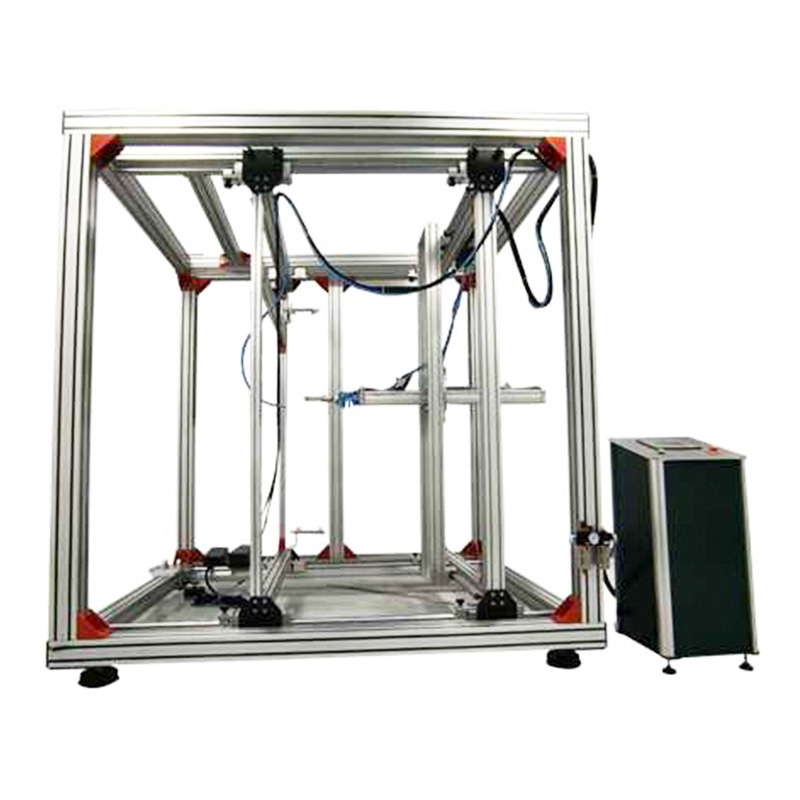
Modern window hardware is expected to operate smoothly for tens of thousands of cycles without excessive friction, deformation, or locking failure. A Friction Stay and Stay Bar Durability Testing Machine is the dedicated equipment that allows hardware manufacturers, window system suppliers, and testing laboratories to verify exactly that. By simulating real-world opening and closing motion under controlled load, speed, and angle, it confirms whether friction stays, stay bars, restrictors, and related window hardware meet long-term performance and compliance requirements. This guide explains what the machine does, which standards apply, what test items it should cover, and how to choose the right model.
What Is a Friction Stay and Stay Bar Durability Testing Machine?
A Friction Stay and Stay Bar Durability Testing Machine is a specialized instrument designed to evaluate the long-term mechanical performance of window hardware that controls how a window opens, holds, and closes. It applies repeated motion to mounted samples while measuring force, cycle count, and structural behavior. The objective is not just to count cycles, but to confirm that the hardware continues to operate safely and within specification after extended use.
Unlike a generic universal testing machine, this equipment is built around the geometry and motion of casement and top-hung windows. Specially designed simulation windows, fixtures, and load points reproduce real installation conditions, which is critical for hardware that fails from accumulated fatigue rather than a single overload.

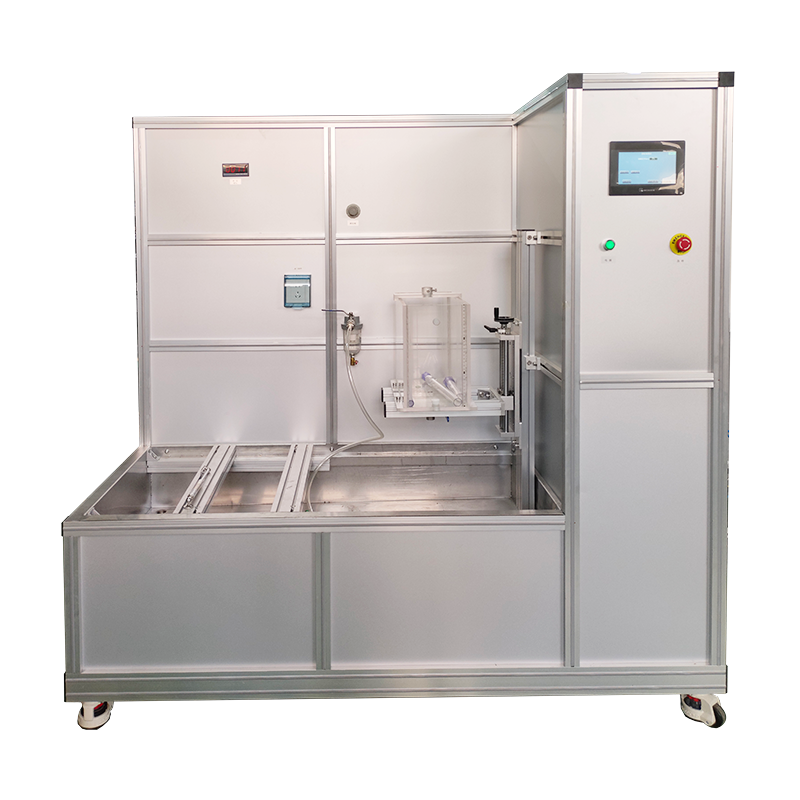
LT-JC212-A01-Friction Stay and Stay Bar Durability Testing Machine
What components does it test?
A well-designed friction stay durability tester is rarely limited to one component. In practice, it is used to test:
Friction stays for side-hung and top-hung casement windows
Stay bars and restrictors that limit or hold the opening angle
Window hinges and pivot hardware
Sliding rollers for sliding window and door systems
Locks and handles, with the right fixtures
This makes the Friction Stay and Stay Bar Durability Testing Machine a core platform for factories that produce several related window hardware families.
Why is durability testing critical for window hardware?
Window hardware lives in an environment where small problems compound quickly. A friction stay that stiffens after 5,000 cycles can lead to complaints and returns. A stay bar that loses locking force may allow a window to swing unexpectedly, which is unacceptable in residential and commercial buildings. Durability testing helps manufacturers validate designs, detect material and assembly weaknesses, demonstrate compliance with national and export standards, and reduce after-sales cost.
How the Machine Simulates Real-World Window Operation
The value of this equipment lies in how realistically it reproduces actual window use. A modern Friction Stay and Stay Bar Durability Testing Machine combines PLC control, servo or pneumatic actuators, sensors, and modular fixtures to repeat consistent motion while logging key data.
A typical test flow:
The sample is mounted on a simulation window panel.
The panel is fitted to a rigid frame representing the real window frame.
Test load is applied through embedded weights that simulate glass and sash weight.
The operator sets cycle count, speed, angle, and stop conditions.
The machine performs repeated opening and closing automatically.
Sensors monitor force, position, and abnormal conditions.
After preset cycles, the machine stops and the sample is inspected.
This controlled setup allows two samples tested with the same parameters to be compared directly, which is essential for R&D and certification.
Test motion, speed, angle, and cycle settings
A high-quality friction stay endurance test setup typically allows users to configure:
Cycle count, often up to 999,999
Test speed, commonly 0 to 10 cycles per minute
Opening angle matched to the design of the window
Travel and stroke through fixture and actuator configuration
This is what turns the equipment into a true window opening cycle test machine, instead of a fixed-speed counter.
Load application and force measurement
A serious Friction Stay and Stay Bar Durability Testing Machine supports:
Embedded weights such as 23 kg, 28 kg, with optional 30 kg add-on
Adjustable load sensors with a range up to 500 kg
Push-pull force gauges for opening, closing, and operating force
Pressure sensors for pneumatic systems
This level of force measurement lets the lab evaluate operating force, locking force, and friction performance, not just survival of the part.
Automatic stop and failure detection
Durability testing often runs overnight. A modern machine therefore includes automatic stop when the preset cycle count is reached, sample-failure stop when load behavior deviates, safety sensors, emergency stop, and unattended operation capability. These features are as important as raw parameters for any production lab.

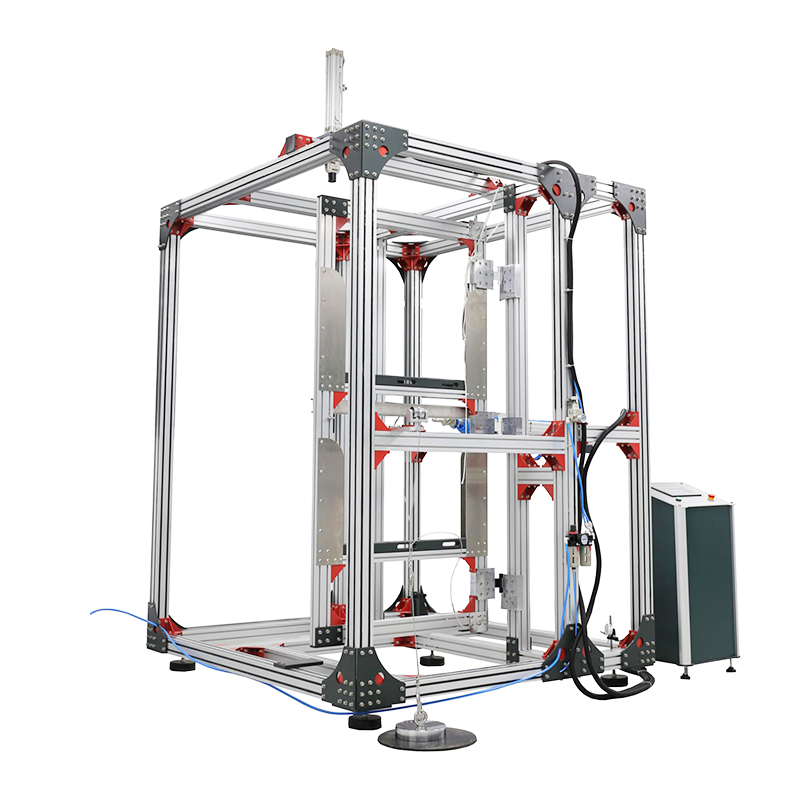
LT-JC212-A01-Side view of friction stay durability tester
Key Test Standards for Friction Stay and Stay Bar Testing
To produce internationally accepted results, a friction stay durability tester needs to align with recognized standards. In Chinese and export-oriented markets, the JG/T series for building window and door hardware is widely used.
JG/T 127 for friction stays
JG/T 127 defines requirements for friction stays, including repeated opening and closing cycles, retained operating force, and post-test inspection criteria. A typical JG/T 127 friction stay test runs the sample through a defined number of cycles at a controlled frequency, then verifies that opening and closing force has not exceeded the permitted limit. For manufacturers exporting to demanding projects, supporting JG/T 127 confidently is a baseline expectation.
JG/T 128 for stay bars and restrictors
JG/T 128 covers stay bars and restrictors, separating locking type from friction type. Each type has its own cycle count and retained-force criteria. For example, restrictors used in inward-opening casement windows have different requirements than those for top-hung windows. A capable JG/T 128 restrictor test setup therefore needs adjustable fixtures, accurate force measurement, and reliable cycle control.
Other related hardware test standards
The same platform is often used to support:
GB/T 32223 for general window and door hardware requirements
JG/T 124 for handles
JG/T 125 for hinges
JG/T 126 for transmission lock mechanisms
JG/T 129 for rollers
JG/T 130 for single-point lock mechanisms
When one Friction Stay and Stay Bar Durability Testing Machine can be reconfigured to handle multiple hardware types, the lab’s investment goes much further.
What Test Items Should a Good Machine Cover?
A common mistake is to focus only on cycles. In real engineering, several test items work together.
Cycle durability testing
The core function is the cycle test itself, in which the machine repeatedly opens and closes the simulation window for a preset number of cycles. A friction stay endurance test should be smooth, consistent, and quiet enough for laboratory use, with frequencies usually between 1 and 10 cycles per minute.
Operating force and opening force testing
The hardware must keep working comfortably over time. The machine should use a push-pull force gauge to measure initial opening force, sustained operating force, closing force, and force after a defined number of cycles. This turns the system into a tool for evaluating both durability and user experience.
Gap, rigidity, and anti-damage testing
Window hardware can fail in subtle ways. A high-quality system supports gap measurement before and after cycles, rigidity testing under defined load, and anti-damage testing that simulates misuse. These items reveal long-term reliability issues that pure cycle counting will miss.
Post-test inspection criteria
After running the cycles, an inspection routine should check visible deformation, wear, looseness, changes in operating force, locking or friction behavior, and surface coating damage. A good test program turns these into quantitative pass or fail criteria.
Main Features to Look for in a Friction Stay Durability Tester
When comparing models, several features make a noticeable difference in daily lab use.
PLC control and touchscreen interface
A PLC-driven Friction Stay and Stay Bar Durability Testing Machine with a touchscreen interface is much easier to integrate into a structured quality system. A 7-inch HMI is common in this segment and provides enough space for parameter settings, status, and alarms.
Adjustable speed, angle, and cycle count
A serious window hinge cycle tester should let users adjust cycle count up to 999,999, speed from 0 to about 10 cycles per minute, opening angle to match the design, and stroke through fixture configuration. This flexibility lets one machine serve several product lines.
Modular fixtures for different window sizes
A capable system typically supports simulation windows such as:
570 × 1200 mm casement windows
380 × 1200 mm casement windows
1200 × 600, 1200 × 1200, and 1200 × 1800 mm top-hung windows
Modular fixtures and clamps let the lab switch between configurations without rebuilding the machine, which is essential for any casement window hardware testing machine that serves more than one product family.
Data recording and repeatability
For research and certification, repeatable and well-logged data is non-negotiable. Look for a stable mechanical structure with high-strength aluminum profile frame, calibrated force and pressure sensors, reliable counters with power-off memory, and optional data export. A stay and restrictor life cycle test is only as valuable as the data it produces.
Typical Applications
A Friction Stay and Stay Bar Durability Testing Machine is a working tool for several types of organizations:
Casement window hardware manufacturers use it for incoming inspection, design validation, and ongoing production sampling.
Architectural hardware laboratories use it to validate new designs, compare suppliers, and benchmark competitor products.
Third-party testing institutions rely on it for repeatable tests aligned with JG/T 127, JG/T 128, and related standards.
Export-oriented companies use it as a core element of quality control, generating documented data for tenders and overseas certification reviews.
How to Choose the Right Machine
Check the hardware types you need to test
Start with your product list. If you make only friction stays, a more focused machine may be enough. If you also produce restrictors, hinges, and rollers, prioritize a system with modular fixtures, which is where a true Friction Stay and Stay Bar Durability Testing Machine outperforms single-purpose testers.
Match window size and load range
Map the window sizes and weights you actually produce. Confirm that simulation windows, embedded weights, and sensor ranges cover those values. A machine that supports 23 kg, 28 kg, and 30 kg loads with a 500 kg adjustable sensor fits most casement and top-hung configurations.
Confirm standards, reporting, and automation needs
Ask the supplier whether the machine supports JG/T 127 and JG/T 128 test profiles, can generate traceable reports, runs safely unattended, and is compatible with future data export needs. Clear answers separate serious suppliers from generic ones.
Ask about customization, service, and training
A Friction Stay and Stay Bar Durability Testing Machine often needs customization for special hardware. Confirm that the supplier offers customized fixtures, installation and training, spare parts, and documented warranty terms.
Common Problems Found During Durability Testing
Excessive opening force after cycling, caused by wear, contamination, or coating breakdown.
Loosening, wear, or deformation of rivets and thin metal arms after repeated motion.
Locking failure or unstable friction, particularly in stay bars and restrictors, detectable through a correct JG/T 128 restrictor test routine.
Poor repeatability from incorrect fixture setup, uneven load, or wrong angle, which is why training and a stable platform matter as much as the hardware itself.
Frequently Asked Questions
Q1. What is the difference between a friction stay tester and a window hinge tester?
A friction stay tester focuses on stays that both support and control window opening, while a window hinge tester focuses on hinge rotation and load. A capable Friction Stay and Stay Bar Durability Testing Machine often handles both with the right fixtures.
Q2. Can one machine test both friction stays and stay bars?
Yes. Modern systems are typically designed as combined platforms that also cover restrictors and related hardware, reducing investment and keeping test conditions consistent.
Q3. What standards should the machine comply with?
JG/T 127 and JG/T 128 are core references for friction stays and stay bars. GB/T 32223 covers general window hardware requirements, and many labs add international or customer-specific specifications.
Q4. How many cycles are typically required?
It depends on the standard and product type. Friction stays often go through tens of thousands of cycles, while certain restrictor types use shorter cycles with more emphasis on retained locking or friction force.
Q5. Can the machine be customized for different window sizes?
Yes. Reputable suppliers offer customized simulation windows, fixtures, and load configurations to match the customer’s product range.
Q6. What data should be recorded during the test?
At minimum, cycle count, operating force, locking or friction force, abnormal stops, and post-test inspection results. Advanced labs also record time-stamped force curves and environmental conditions.
Conclusion: Why a Reliable Durability Testing Machine Matters
Window hardware is small, but its impact on building safety, user experience, and brand reputation is large. A reliable Friction Stay and Stay Bar Durability Testing Machine gives manufacturers and laboratories a controlled, standards-aligned way to verify that friction stays, stay bars, restrictors, and related components can survive years of real-world use. With realistic motion simulation, accurate force measurement, support for JG/T 127 and JG/T 128, and flexible fixtures for different window sizes, it turns durability from a marketing claim into measurable engineering evidence.
Need a custom solution for your friction stay and stay bar testing project? Contact us for technical recommendations, model selection, and a tailored configuration that matches your laboratory and production goals.
Last Article:Mastering Safety & Durability: The Ultimate Guide to the LT-HBXZ02 Scooter Dynamic Strength Testing Machine
Next Article:No More