In the fast-paced world of electronics and automotive manufacturing, product failure is not an option. Components must withstand extreme environmental changes without cracking, delaminating, or failing electrically. This is where the Two-Zone Thermal Shock Test Chamber becomes an indispensable tool for your quality control lab.
Unlike standard temperature chambers, a thermal shock testing machine is designed to simulate sudden, drastic temperature changes—moving a product from extreme heat to extreme cold in seconds. This article will guide you through the mechanics, benefits, and selection criteria for choosing the right environmental test equipment for your reliability testing needs.

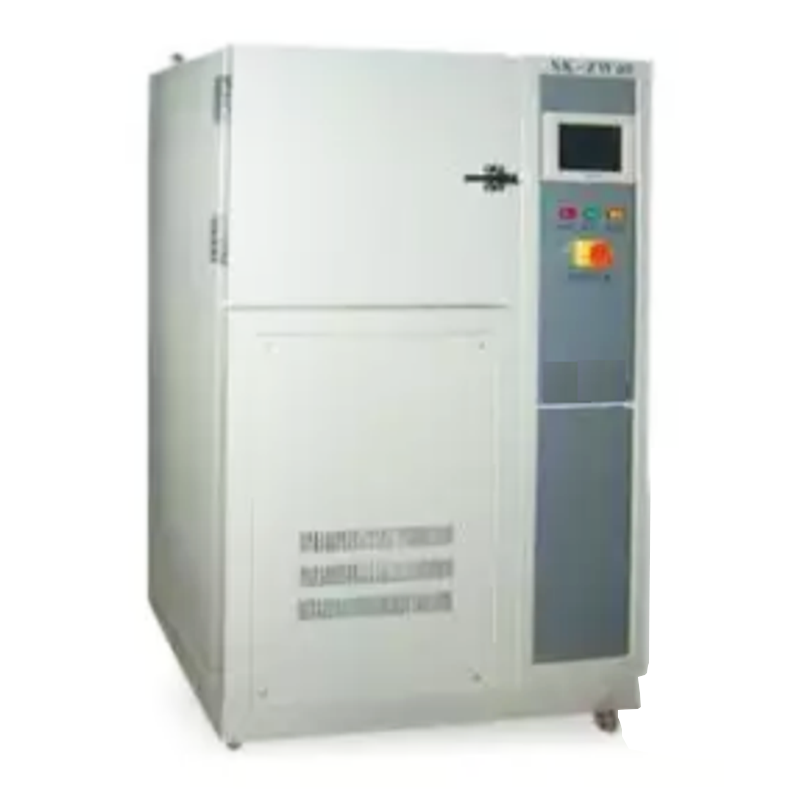
Two-Zone Thermal Shock Test Chamber
What is a Two-Zone Thermal Shock Test Chamber?
A Two-Zone Thermal Shock Test Chamber (often referred to as a "Two-Basket" system) consists of two distinct zones: a high-temperature zone and a low-temperature zone.
The testing process involves placing the specimen in a basket. During the "shock" phase, the basket rapidly transfers the specimen between the hot and cold zones. This mechanical movement creates an almost instantaneous temperature change, stressing the material far more than a gradual ramp rate could.
Key Differences: Two-Zone vs. Three-Zone
While three-zone systems exist, the two-basket thermal shock design is often preferred for its simplicity and cost-effectiveness.
Two-Zone: Uses a mechanical elevator to move samples between Hot and Cold zones. Best for pure thermal shock testing.
Three-Zone: Adds a separate "Test Zone" where air is circulated into the chamber. Better for combined vibration/thermal tests but more expensive.
For most PCB, semiconductor, and plastic component testing, the Two-Zone Thermal Shock Test Chamber provides the rigorous stress testing required by standards like MIL-STD and JEDEC.
Why Your Lab Needs a Temperature Shock Tester
Why subject your products to such harsh conditions? The answer lies in finding "latent defects."
1. Accelerated Life Cycle Testing
A temperature shock tester compresses years of wear and tear into days. By cycling between -65°C and +150°C repeatedly, you can predict the lifespan of a product before it hits the market.
2. Material Compatibility Verification
Different materials expand and contract at different rates (Coefficient of Thermal Expansion). When bonded together (like a chip on a board), this mismatch causes stress. Our reliability testing equipment reveals if your adhesives or solders will fail under stress.
3. Compliance with Global Standards
Most international standards require specific thermal shock profiles. Using a certified environmental test equipment ensures your data is valid for:

Two-Zone Thermal Shock Test Chamber Display Screen
Critical Features to Look For in Thermal Shock Equipment
Not all machines are built equal. When sourcing a Two-Zone Thermal Shock Test Chamber, focus on these technical pillars:
Rapid Recovery Time
The core value of this machine is speed. Look for a system that guarantees a temperature recovery time of ≤ 5 minutes (or even ≤ 10 seconds for air-to-air shock) after the door opens or the basket moves. Slow recovery ruins the "shock" effect.
Precision Control System
Modern thermal shock testing machines utilize PLC controllers with touch screens (like the TEMI or OYO brands). This allows for:
Robust Refrigeration System
To reach -65°C quickly, the unit requires a cascade refrigeration system (often using French Tecumseh compressors). Ensure the system uses eco-friendly refrigerants and has safety protections against high pressure.
Applications: Who Uses Thermal Shock Chambers?
The versatility of a Two-Zone Thermal Shock Test Chamber makes it a staple in various industries:
Electronics & Semiconductors: Testing IC packaging, PCBs, and LCD modules for solder joint fatigue.
Automotive: Evaluating sensors, ECUs, and battery components that face under-hood heat and winter cold.
Aerospace: Ensuring avionics can survive rapid altitude changes.
Plastics & Rubber: Checking for brittleness or cracking in composite materials.
Technical Specifications (Reference Model)
Below are the standard specifications for our high-performance series. Note: Customization is available.
| Feature | Specification |
| Temperature Range | High: +60°C to +150°C / Low: -10°C to -65°C |
| Fluctuation | ±0.5°C |
| Uniformity | ±2.0°C |
| Shock Method | Basket Transfer (Two-Zone) |
| Transfer Time | < 10 Seconds |
| Controller | Touch Screen PLC (TEMI/OYO Optional) |
| Inner Material | SUS 304 Stainless Steel |
| Safety Devices | Overheat protection, Compressor overload, Fuseless switch |
FAQ:Common Questions About Thermal Shock Testing
Q: Can I use a Two-Zone Thermal Shock Test Chamber for just high-low temp testing?
A: Yes, but it is overkill. If you only need slow ramping (e.g., 3°C/min), a standard Programmable Temperature Humidity Chamber is more energy-efficient. Use the shock chamber for rapid transitions.
Q: How do I maintain the refrigeration system?
A: Regular cleaning of the condenser (dust removal) is vital. Also, ensure the water cooling system (if applicable) has clean water flow to prevent compressor overheating.
Q: What is the difference between Air-to-Air and Liquid-to-Liquid shock?
A: This article focuses on Air-to-Air (Two-Zone). Liquid-to-Liquid uses oil or water and offers faster shock but is messier and more expensive. Air-to-Air is the industry standard for most electronics.
Conclusion & Request a Quote
Investing in a high-quality Two-Zone Thermal Shock Test Chamber is investing in your brand's reputation. Don't let field failures cost you millions in recalls.
At [Dongguan Lituo Testing Instrument Co., Ltd.], we specialize in manufacturing premium environmental test equipment tailored to your specific ISO and military standards.
Ready to upgrade your lab?
Contact our engineering team today for a custom quote or a video demonstration of our thermal shock testing machine in action.
Last Article:LT-WJB15A Erasure Rate Testing Machine: Complete Guide to Coloring Paper Making for QB/T 2309 Eraser Testing
Next Article:No More