In the fast-paced world of manufacturing, product reliability is not just a feature—it's a necessity. From the smartphone in your pocket to the components under a car's hood, every product must withstand the rigors of its intended environment. This is where an environmental test chamber becomes an indispensable tool for engineers and quality control managers.
These sophisticated pieces of equipment simulate extreme conditions to identify weaknesses before a product ever reaches the consumer. In this comprehensive guide, we will explore the different types of environmental chambers, the critical technical parameters you need to know, and how to select the right reliability testing equipment for your specific needs.
What is an Environmental Test Chamber and Why Do You Need One?
An environmental test chamber is a specialized enclosure used to test the effects of specified environmental conditions on biological items, industrial products, materials, and electronic devices. By replicating conditions like extreme heat, freezing cold, high humidity, or rapid temperature changes, these chambers help manufacturers answer a critical question: Will this product fail in the real world?
Using these chambers allows companies to:
-
Accelerate Aging: Simulate years of wear and tear in a matter of days or weeks.
-
Ensure Compliance: Meet strict international standards (ISO, ASTM, IEC).
-
Reduce Warranty Costs: Catch defects during the R&D phase rather than after shipment.
-
Improve Brand Reputation: Deliver products that are proven to last.

Key Types of Environmental Chambers: A Comprehensive Breakdown
Not all testing requirements are the same. Depending on your industry, you may need to simulate specific stressors. Here are the primary categories of chambers available.
The temperature and humidity chamber (often called a climate chamber) is the workhorse of reliability testing. It controls both temperature and moisture levels to simulate tropical, arid, or freezing environments.
According to industry standards, a high-quality chamber should offer a wide operational range. For instance, advanced models can reach temperatures as low as -70°C and as high as +150°C, with humidity control ranging from 20% to 98% R.H. These are essential for testing electronics, pharmaceuticals, and aerospace components to ensure they don't corrode, crack, or malfunction under stress.

Constant Temperature and Humidity Test Chamber
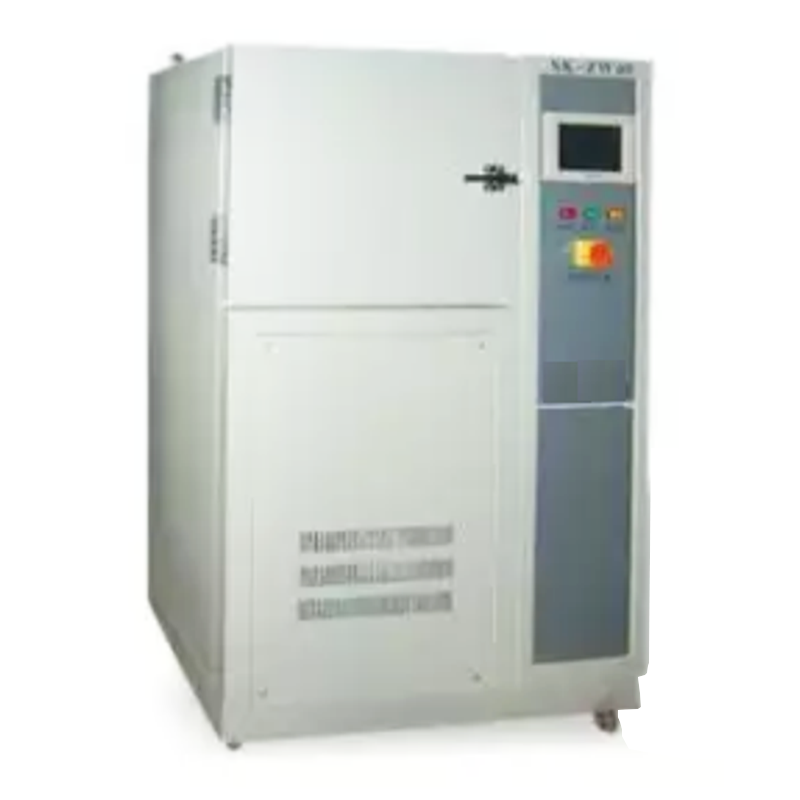
While a standard chamber changes temperature gradually, a thermal shock test chamber is designed for instant gratification—or rather, instant stress. These units test a material's ability to withstand sudden transitions from extreme heat to extreme cold.
There are generally two configurations:
-
Two-Zone (Basket Transfer): The product sits in a basket that physically moves between a hot zone and a cold zone.
-
Three-Zone (Dampers): The product stays static in a central test zone, while dampers open to expose it to hot or cold air from adjacent reservoirs.
This type of testing is crucial for detecting cracks in solder joints, glass-to-metal seals, and composite materials.
For industries dealing with metals, coatings, and automotive parts, corrosion resistance is paramount. A salt spray test chamber creates a corrosive fog (usually a 5% NaCl solution) to accelerate rust and oxidation.
These chambers can perform various test cycles, including:
-
NSS (Neutral Salt Spray): The most common test for general corrosion.
-
CASS (Copper Accelerated Acetic Acid Salt Spray): A more aggressive test for decorative plating.
-
Cyclic Corrosion Testing: Alternating between salt spray, drying, and humidity to mimic real-world weather cycles.
Other Specialized Environmental Equipment
Beyond the "big three," modern manufacturing requires testing for a variety of other environmental factors:
-
UV Aging Testers: Use fluorescent UV lamps to simulate the damaging effects of sunlight, causing fading or cracking in plastics and paints.
-
IP Rating Testers: Specifically Rain Test and Dust/Sand Test chambers verify Ingress Protection (IP) ratings, ensuring devices are waterproof and dust-tight.
-
PCT/HAST Chambers: Pressure Cooker Tests (PCT) and Highly Accelerated Stress Tests (HAST) use high pressure and saturated steam to force moisture into semiconductor packages, testing for hermetic seal failures.

UV Test Chamber
Critical Technical Parameters to Consider When Buying
Selecting the right environmental test chamber requires looking beyond the price tag. You must analyze the technical specifications to ensure the machine fits your product's needs.
1. Temperature Range and Ramp Rates
The most obvious spec is the temperature range. However, pay close attention to the ramp rate—how fast the chamber can heat up or cool down.
-
Standard Rate: Typically 1°C to 3°C per minute.
-
Fast Change: Some applications require 10°C to 15°C per minute.
Ensure the chamber's compressor system (often using brands like Tecumseh) is powerful enough to handle your required cooling speeds.
2. Controller and Interface
The "brain" of the machine is just as important as the cooling system. Modern chambers utilize programmable logic controllers (PLCs) with touch screen interfaces (such as TEMI or OYO controllers). Look for features like:
-
USB/Ethernet connectivity for data logging.
-
Multi-segment programming to automate complex test cycles.
-
Real-time graphing of temperature and humidity curves.
3. Construction and Safety
The internal material should be SUS304 Stainless Steel to resist corrosion from humidity and salt tests. Externally, a baked enamel finish or stainless steel is standard. Safety features are non-negotiable; ensure the unit has over-temperature protection, compressor overload switches, and dry-fire protection for humidifiers.
International Standards Compliance: ISO, ASTM, and GB
If your products are sold globally, your testing equipment must adhere to international protocols. A reliable environmental test chamber will be designed to meet or exceed these standards:
|
Standard Body
|
Common Standards
|
Application
|
|
IEC
|
IEC 60068-2-1 / 2-2
|
Basic environmental testing (Cold/Heat)
|
|
ASTM
|
ASTM B117
|
Operating Salt Spray (Fog) Apparatus
|
|
ISO
|
ISO 16750
|
Road vehicles - Environmental conditions
|
|
GB
|
GB/T 2423 Series
|
Basic environmental test procedures
|
|
MIL-STD
|
MIL-STD-810
|
Environmental Engineering Considerations
|
Verifying that your chamber complies with these standards ensures that your test data will be accepted by clients and regulatory bodies worldwide.
Industries Benefiting from Environmental Testing
The application of reliability testing equipment spans across almost every manufacturing sector. Based on current industry trends, the heaviest users include:
-
Automotive & Aerospace: Testing components for vibration, extreme altitudes (low pressure), and thermal cycling.
-
Electronics & 5G: Ensuring circuit boards and communication devices function in high humidity and heat.
-
New Energy: Critical for testing battery safety, including thermal runaway and explosion-proof testing.
-
LED & Lighting: Using UV and humidity chambers to test for lens yellowing and seal integrity.
-
Furniture & Textiles: Testing colorfastness and material degradation under sunlight (Xenon arc testing).
Why Choose LITUO Testing Instruments?
When investing in an environmental test chamber, you need a partner, not just a vendor. LITUO Testing Instruments has established itself as a high-tech enterprise dedicated to precision and innovation.
With a manufacturing base in Dongguan, China, LITUO combines rigorous engineering with cost-effective solutions. Here is why global clients, including industry giants like Foxconn, Midea, and Haier, trust LITUO:
-
Customization: Whether you need a walk-in chamber or a specific voltage configuration, LITUO offers tailored solutions.
-
Certified Quality: Recognized as a "High-Tech Enterprise" with ISO-compliant manufacturing processes.
-
Global Support: With products exported to over 50 countries, LITUO provides comprehensive after-sales support, including installation training and remote troubleshooting.

Conclusion
Investing in the right environmental test chamber is an investment in your product's future. By understanding the differences between thermal shock, humidity, and corrosion testing, and by selecting a reputable manufacturer like LITUO, you ensure that your products are built to survive—and thrive—in any environment.
Ready to upgrade your lab? Contact LITUO Testing Instruments today to discuss your specific testing requirements and get a custom quote.
LITUO Testing Instruments : Dongguan Lituo Testing Instrument Co., Ltd.
EMAIL: vera@lituotest.com
 Rubber Sleeve Rebound TesterVIEW PRODUCTS
Last Article:Single Wing Drop Test Machine: The Ultimate Guide to Packaging Durability Testing
Next Article:Universal Life Cycle Testing Machine: Precision Durability Testing for Plumbing & Sanitary Ware